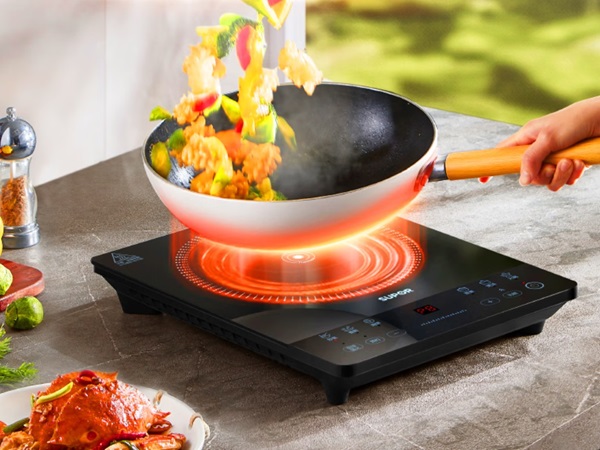
Internal heat generation in induction cookers mainly comes from core electrical components such as IGBTs (Insulated Gate Bipolar Transistors) and power modules, the coil pan (excitation coil), and the rectifier bridge stack. These components generate heat due to efficiency losses during operation. Currently, forced cooling with fans is the standard method to prevent overheating damage.
The cooling fan in an induction cooker often sounds relatively loud. This is primarily because the heat sources are concentrated, and the flat, slim body of the cooker leads to narrow and obstructed airflow paths. As a result, the fan must operate at high speeds. Airflow turbulence passing through grilles and heatsinks generates wind noise, while vibrations are transmitted through the glass panel and housing. Both the sound source and the propagation path leave little room for noise reduction.
In the pursuit of product differentiation and an ultimate user experience, leading domestic induction cooker manufacturers have tested a solution that replaces the traditional cooling fan with a diaphragm pump water-cooling system:
Using diaphragm pump water cooling to replace traditional fan cooling can reduce the internal temperature of the induction cooker by 2–3°C. This seemingly small temperature difference holds significant value. In practice, it can extend the lifespan of core components by 25%–50%, significantly reducing failure rates and after-sales costs. It also prevents thermal derating, ensuring sustained high-power output. The advantage in quiet operation is particularly prominent — the water-cooling pump runs much quieter than a fan, completely eliminating the "whooshing" airflow noise, creating a differentiated selling point for high-end products. Furthermore, the water-cooling system is not constrained by the thickness of the appliance body, providing a forward-looking thermal solution for future higher-power and thinner models. This represents a comprehensive upgrade in reliability, user experience, and technological readiness, holding substantial strategic value for induction cooker manufacturers.
The test was conducted using a NIDEC diaphragm pump (model 00H220H012, a 12V DC water pump) for water circulation cooling. The pump operates quietly, has a service life of approximately 10,000 hours, and its flow rate and lifespan fully meet the product requirements. Compared to traditional cooling fans, switching to a diaphragm pump will increase product costs to some extent. Therefore, this solution is better suited as a key premium feature for high-end home appliances, addressing users' core pain points regarding quiet operation and reliability.