
Currently, in the vast majority of routine outpatient and ward infusions, the infusion bottle or bag is typically hung on an IV pole approximately 1 to 1.5 meters above the puncture site. Gravity potential energy generated by the liquid level difference is used to push the fluid into the vein. This gravity-fed infusion method is the most classic, mature, and lowest-cost solution.
A company based in Shenzhen has invented a gravity-free infusion pump that requires no IV pole, is unaffected by liquid level height, delivers more stable flow rates, and allows patients to move around. It is suitable for special scenarios such as disaster relief, ambulances, field operations, and home care.
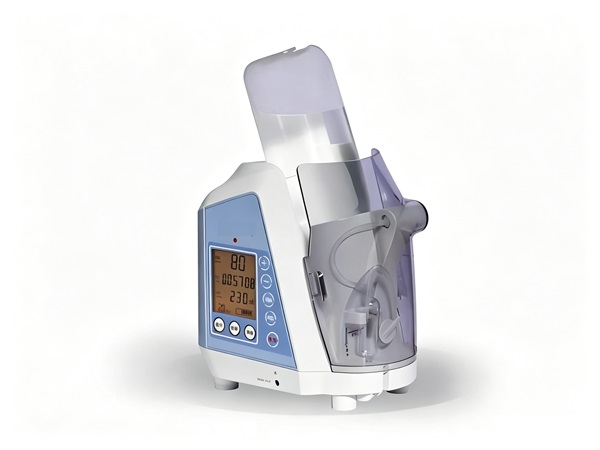
Working Principle:
A diaphragm pump injects highly filtered, clean air into a sealed infusion bottle or bag. The internal air pressure within the bag gradually increases, creating a positive pressure environment higher than the external atmospheric pressure. Under this positive pressure, the liquid is smoothly pushed through the infusion tubing into the patient's vein. By controlling the injection pressure and flow rate of the diaphragm pump, precise regulation of the infusion speed can be achieved.
Calculated based on the standard adult infusion rate of 40–60 drops per minute (approximately 2–3 mL/min) or rapid infusion of 80–120 drops per minute (approximately 4–6 mL/min), precisely controlling the diaphragm pump's output at such low flow rates presents a new and challenging application difficulty. The core challenge lies in the fact that what is needed is an extremely stable low flow rate on the liquid side, yet what is actually controlled is the pressure and micro-flow rate on the gas side, all while being affected by multiple disturbance factors such as falling liquid level and changing liquid volume.
Under such ultra-low flow rate conditions, if a brushless DC motor is operated continuously, it is highly prone to stalling due to insufficient torque. Therefore, the closed-loop continuous control strategy must be abandoned in favor of an intermittent open-loop control scheme.
The control principle is as follows: The motor is run at a reliable, relatively low speed (for example, the minimum safe speed that just avoids stalling) for a short duration (e.g., 50 ms), followed by a stop period (e.g., 60 ms), and this cycle repeats. Average flow rate = Run time / Cycle time × Single-cycle flow rate. Theoretically, by adjusting the duty cycle, the average flow rate can be reduced indefinitely.
It is important to note that diaphragm pumps using brushed DC motors are unsuitable for this operating mode, as the electrical sparks generated by frequent start-stop cycles severely shorten the lifespan of the carbon brushes. Similarly, diaphragm pumps using stepper motors are not an ideal choice due to their relatively slow motor response speed.
Considering the device needs to be powered by batteries, the customer ultimately selected the NIDEC 12V diaphragm air pump: model 00H220H022.