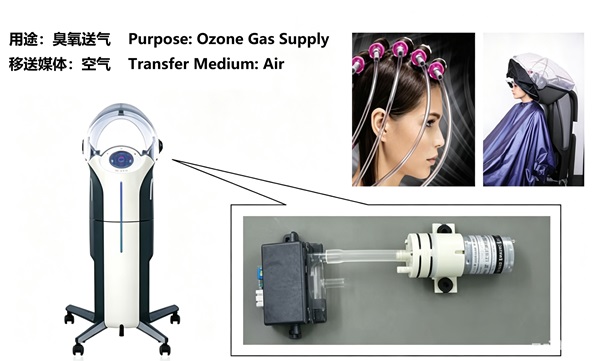
The diaphragm pump in curling irons primarily delivers external air (oxygen) into the ozone generator, where the air undergoes high-voltage ionization to produce ozone. The ozone is then transported through tubing to the user's hair or scalp.
By utilizing ozone, microbial growth inside the chamber and on hair residues is inhibited. The heating plates and comb gaps of curling irons tend to accumulate residual hair oils, styling sprays (organic compounds in hairspray/hair oils), and dandruff. In humid environments (condensation from residual heat after each use), mold and bacteria can easily proliferate. Low-concentration ozone, applied between uses or during the cool-air styling stage, oxidizes and disrupts the cell membranes and proteases of microorganisms, reducing odors and eliminating hygiene dead zones — essentially serving as a micro-level antibacterial aid. It also mildly decomposes residual organic attachments: small amounts of styling product residue left on the hair surface after styling, along with volatile organic molecules causing odors, can be lightly oxidized by ozone into smaller, odorless molecules. This provides a mild deodorizing effect, leaving the hair feeling less sticky.
Commercial hairdressing equipment with ozone functionality requires an air pump capable of long-term continuous or quasi-continuous operation, placing high demands on cumulative service life. The NIDEC micro diaphragm pump offers advantages in lifespan, stability, and supply chain maturity among home appliance-grade solutions, which is why it has been selected for use in several mass-produced models. The main models used include: 00H220H022 and 00H220H042.